
Greenland

“We need Greenland very badly. Greenland is a very small amount of people, which we’ll take care of, and we’ll cherish them, and all of that. But we need that for international security”
United States President Donald J. Trump in a 4 May 2025 interview
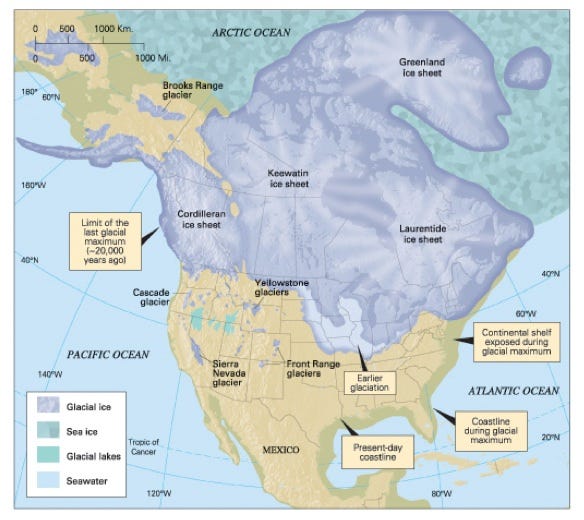
In the beginning, as in so many other human beginnings, it was cold in Greenland. Indeed, so cold that the entirety of Greenland had been buried beneath a great ice sheet since before Man spread out Africa. Millennia had passed, and Greenland remained quiet and frozen. The First Men who settled the Americas passed it and the rest of the far north by during their journey in the distant past. Tens of thousands of years later the Amerindians too passed it by, blocked as it was by even greater ice sheets spread across what is now Canada. They sought the great beasts of the Pleistocene, not empty ice fields. Civilizations rose and fell in the Americas and Eurasia as the glaciers retreated and the climates warmed. They were to rise and fall four times before Man finally found Greenland.
The climate shock which led to the Crisis of the Twenty-Third Century among the civilizations of Eurasia afflicted the peoples of the far north as well. The cooling climate of Siberia pushed peoples out while the warming climate of the northwestern Atlantic drew them in. The Belkachi people of northeastern Siberia, perhaps drawn by the expansion of musk-ox and caribou in the warming Canadian north, migrated across the Bering Strait to the Americas. There, they formed what is called the Artic Small Tool tradition while their cousins across the strait were overrun by others.
Peoples embracing the Arctic Small Tool tradition, perhaps speaking languages related to modern Aleut, reached Greenland five centuries after crossing the Bering Strait. They crossed into northern Greenland via the Nares Strait from the Queen Elizabeth Islands. One group, the Independence I culture, remained in the High Arctic as the rest migrated south to the form the Saqqaq culture. The former lasted only a few generations before it died off in the changing climate of the early 2nd millennium BC. The latter, dwelling in the milder southwest, endured into the early 1st millennium BC.
The Saqqaq people were afflicted by the same cooling conditions which wiped out their Independence I cousins in the High Arctic, but were merely diminished rather than destroyed at the end of the 2nd millennium. Most Saqqaq sites were abandoned or depopulated at that time, but certain places such as Nipisat Island in western Greenland remained inhabited.
The few surviving bands of Saqqaq were overrun by their relatives from the mainland as the world’s climate shifted again around 800 BC. Those relatives bore a new material culture - the Dorset culture. The Dorset people, just as the Saqqaq & Independence I people had fourteen centuries earlier, crossed the Nares Strait. They proceeded to colonize Greenland from north to south, forming the Greenlandic Dorset culture. They would eke out a harsh living for eight or nine centuries before a renewed global cooling first reduced their range to west-central Greenland, then extinguished them as a people.
The Dorset lingered longest in west-central Greenland, but even they could not endure the cooling episode of the mid-1st millennium AD. By the time of the Fall of Rome, Greenland was empty for the first time in over twenty-five hundred years. It was not until the end of the millennium that men resettled the island - though that time from the east as well as the west. Norsemen sailing from Iceland settled western Greenland as the Late Dorset people recolonized the north for the third time. Neither was to last.
While the distant ancestors of the Dorset had brought bows with them from Asia, over the centuries they lost the technology. Their isolated population was simply too small to ensure that the knowledge of complex tool production was passed down every generation. They shifted to utilizing simpler harpoons and lances in their hunts for food.
It was the Inuit of the Thule culture who reintroduced bows to the far north of the Americas. Possessing tools far more sophisticated and extensive than those possessed by the Dorset, the Inuit thrived in their northern Alaska home. Their tools and larger boats enabled them to collect more food - particularly from whales - in the same amount of land. Thus they first demographically expanded, and then territorially expanded as they reached the far north’s carrying capacity.
The Thule Inuit rapidly drove east out of northern Alaska into northern Canada beginning in the 11th century. Their advance came at the expense of the Dorset. As uncompromising as the Arctic winter, the Inuit destroyed the Dorset in entirety by the 15th century. The Greenlandic Norse, weakened by the beginning of the Little Ice Age, only outlasted them by several decades. While there are signs and stories of Inuit and Norse conflicts, the last Norse settlements were abandoned rather than destroyed, suggesting that the famine rather than fighting ended the Norsemen. With the Norse gone, Greenland again was ruled by new inhabitants.
The Portuguese and English both sailed to Greenland in the 15th and 16th centuries, but neither established colonies. The primary interest of the European states was not the land, but instead the sea. Whales were quite valuable at the time, so whalers from a number of European states were willing to sail to distant and dangerous waters in order to obtain the objects of their desire. Some of the European whalers journeyed ashore, trading nails and knives with the Inuit for whale products.
While some of the reports of those whalers such as those accompanying David Danell were published in Europe, the nature of Greenland’s new population was not well understood for centuries. The 18th century Lutheran priest Hans Egede lobbied for a decade for funding for a new settlement in Greenland, with the intention of finding any surviving Norsemen and converting them to Protestantism. He succeeded in 1721, and sailed to Greenland.
Egede did not find any Norsemen despite extensive search efforts, and instead settled down in Greenland to convert the Inuit. Learning the Greenlandic Inuit language, he and other missionaries set up a network of posts on Greenland’s southwest coast. The missionaries inadvertently devastated the population by introducing European diseases to the previously unexposed population, reducing it to 5,122 by 1789.
In spite of the devastation wrought by disease and the wealth offered by Danish trade, it was difficult to convert the Greenland Inuit to Christianity. It wasn’t that the population was resistant to Christianity - indeed many were quite quick to receive baptism - it was instead that their values were alien to those of the missionaries. The highest virtue among the Greenlandic Inuit was skill at seal hunting. While understandable given that life depended on successful seal catches, it was part of a value system orthogonal to that imposed by the Christian religion. The missionaries tried to settle the Greenland Inuit down in agricultural settlements where Christian values could be better imposed and lived, but the harsh climate of the island precluded successes for a century.
Instead, the Royal Greenland Trading Department utilized Inuit hunters to obtain goods for sale in Europe. Its agents, forbidden from intermarrying with the Inuit, nonetheless pursued personal relationships with them. When caught, they were forced to remain on the island, and were in time assimilated by the Inuit. Thus today about half of the male lineages and a fifth of the overall ancestry in modern Greenlanders derive from Europeans. Less than 1% of Greenlander matrilineal ancestry derives from Europeans.
As the world’s climate warmed and global trade increased following the Napoleonic Wars, Greenland too benefitted. The fishing and whaling industries became even more important, and provided the wealth which allowed both Inuit and Danish Greenlanders to purchase imported goods. It also allowed for the establishment of the first Greenland Inuit (Greenlandic) language press in 1861 as well as a gradual population recovery.
While Greenland had been known to Americans since the founding, it wasn’t until the 1860s that the United States set its eyes on its acquisition. US Secretary of State William Seward, influenced by a report by the US Coastal Survey, negotiated for Greenland’s purchase in 1867-8. Decades later, the US Ambassador to Denmark, eager to create a new constellation of alliances in the Far East, offered to trade two islands in the Philippines for Greenland and the Danish West Indies. In that offer, the ambassador noted that Denmark did not have the resources or attention to develop Greenland, so it would be better off as a US territory. Several years later, the United States purchased the West Indies, but not Greenland.
In between those negotiations, Greenland’s population grew from rising prosperity. The population of around 5,000 at the end of the 18th century rose to 8,000 by the middle of the 19th, and to 14,643 by 1918. Island government, long in the hands of Royal Greenland Trading officials, was opened to others in 1908 with the end of the company’s monopoly. While the general population was remained excluded from governance, the regional councils formed in 1911 gave some Greenlanders advisory rights.
Real power was centralized in the hands of the Greenland Board in 1912. The Board inherited the structures created by the company, but reformed them along the lines of the civil service. For instance, regional inspectors, once merchants, became bailiffs - lawyers responsible for judicial and public health duties. Governance remained by largely appointment rather than by election, and the island was divided into two administrative regions. This system of government would remain in legal effect until 1950, although it effectively ended in 1940.
Danish administrators in Greenland were faced with a conundrum following Germany’s conquest of Denmark in April 1940. They could accede to the demands of the hated German puppet government. They could allow an Anglo-Canadian occupation which would involve Free Norwegian troops, and thus possibly reopen Norway’s claims on Greenland which had been rebuffed from 1931 to 1933. Or they could declare themselves sovereign and allow US troops to occupy the island. They decided upon the last, with the bailiffs declaring the Greenland was sovereign on 3 May 1940. US forces arrived on 20 and 22 May 1940, establishing diplomatic relations and pre-empting an Anglo-Canadian occupation while maintaining Greenland’s neutrality.
Greenland was important in the Second World War for three primary reasons. The first was its value in weather forecasting. The second was its value as a naval and air base during the Battle of the Atlantic. Aircraft could be flown from North America to Greenland, and then from Greenland to Iceland, then from Iceland to Britain after refueling on each stop. Few aircraft had the range to make a direct flight across the Atlantic at the time. The third was the major cryolite mine in Ivittuut in southern Greenland, which was an invaluable raw input in aluminum production.
Greenland’s government became considerably more democratic during the Second World War. The bailiffs, no longer able to depend on support from Denmark, had to ensure that they maintained support from the people. To do so, they consulted the regional councils which they had previously disregarded, leaning on them to provide support for their decisions. Independently of the political structure, exports of cryolite and provision of services to US military personnel provided and still provide Greenlanders with wealth independent of Denmark.
After the end of the war, Denmark resumed its old control over Greenland. However, like other European colonies, Greenland had grown accustomed to autonomy and the little self-governance which it had enjoyed. Denmark, much like France, desired to keep its colonies and instead pursued a path of greater political integration. Subsidies for the island were expanded with an aim at concentrating the population in towns. Greenland’s administration was unified with the replacement of the north and south councils with a unified Greenland Land Council in 1951. The 1953 Constitution made Greenland an integral part of Denmark and provided Greenland two seats in the Danish parliament.
The increased concentration of the population in the towns and the resulting improvements in public health drove a population boom in Greenland. Previously kept in check by a combination of disease, starvation, infanticide, and suicide; the newly sedentary population rose from about 20,000 in 1945 to 33,000 in 1960 and 46,000 by 1970. The population boom strained Danish resources, and led to the adoption of a state sterilization policy.
In the 1960s, doctors employed by the Danish government implanted IUDs in over 4,000 Greenlandic women. In 1970, the sterilization program largely replaced IUDs with Depo-Provera shots. The practice continued into the early 1990s, although only with vigor to the end of the 1970s. The IUDs and Depo-Provera shots had three lasting consequences. The first was demographic - Greenland’s population today is only a fraction of what it would have been had it not been for the sterilization program, and is top heavy due to the smaller sizes of generations born after the 1960s. The second was a lasting women’s health issue due to both the intended sterilizations and unintended side-effects. The final was legal. Sterilization campaigns are considered violations of human rights by various international human rights organizations.
Greenland’s US and Danish-sponsored modernization from the 1940s to the 1970s led to the commensurate formation of insular political parties. The Inuit Party was formed in 1963 by two journalists and a biologist to advocate for equal pay for Greenlandic Inuit. It was a weakly organized party, and evaporated by the late 1960s. Its successor organization, Sukaq Party, was founded in 1969 and advocated for policies similar to the Inuit Party. It was effectively a personal vehicle for Knud Hertling, who discarded what little structure it had after winning the 1971 election. In the following election, the Greenland’s trade union ran candidates, as did a hunters & fishers association.
It was not until the enactment of home rule in 1979 that formal political parties organized on ideological lines played a substantial role in Greenlandic politics. Denmark’s 1973 entrance into the European Economic Community was deeply unpopular in Greenland, whose voters feared that the customs union would allow European fishermen to devastate the fish populations which they depended on for wealth and sustenance. Understanding this, Denmark decided to offer Greenland a path to devolution in 1975. The Joint Greenland-Danish Home Rule Commission, comprised of both Greenlandic Inuit and Danes, interviewed many Greenlanders eventually proposed the Home Rule Act of 1979. Once passed, it created Greenland’s insular parliament and devolved insular affairs to Greenland. The judiciary, foreign relations, and monetary policy remained under the control of Denmark.
The creation of Greenland’s parliament led to the emergence of two main parties. The first, Siumut, is a social democratic sovereigntist party. The second, Atassut, is a liberal unionist party. In the 1980s, they were joined by Inuit Ataqatigiit, a green separatist party. Siumut emerged as the natural ruling party of Greenland. In the forty-six years since the establishment of Greenlandic Home Rule, Siumut has led the ruling coalition government for thirty-seven years and been a junior coalition partner for six. They have only been out of power once - from 2009 to 2013.
Siumut’s initial priorities in the early 1980s were to encourage an increase in fish exports, to expand Greenlandic Inuit language education and use, and to continue modernization. They were successful, although as with all policies, faced unintended as well intended consequences. One of their successes, the withdrawal of Greenland from the European Communities, protected Greenland’s fishing industry, but reduced the amount of financial subsidies which the island was eligible for.
Continued urbanization and modernization under Siumut afflicted Greenlanders severely. The Inuit, like many peoples of the far north, are poorly adapted to sedentary lifestyles and agricultural diets. The shift from the native Inuit diet heavily based around meats to mass Western cuisine drove a huge increase in diabetes and obesity among the Greenlanders. In addition to the direct effects of such a lifestyle and diet, alcohol and tobacco became immensely popular. They further damaged the health of Greenlanders. While the anticipated lifespan of Greenlanders had grown from thirty-nine to sixty-three under Denmark’s post-war development programs, it stagnated for the first fifteen years under Home Rule. Modern medicine and sanitation can only make up for addictions and a poor diet to a certain extent.
After a long period of Siumut dominance, it suddenly lost power in the April 2009 elections. A combination of anti-incumbency sentiment, frustration over financial mismanagement, and a desire for a more aggressive approach to sovereignty in the leadup to the June 2009 expansion of home rule delivered Inuit Ataqatigiit almost a majority of seats in Greenland’s parliament. They promptly deemed Greenlanders to be a nation separate from the Danes, designated Greenlandic Inuit as the sole official language, reallocated a greater share of oil royalties to Greenland’s parliament, and assumed greater authority over the police.
The assumption of greater autonomy in 2009 accelerated Greenlandic desire for independence. Greenlanders ruled themselves and were eager to assume what little power was left in the hands of Denmark, but held back from complete separation. The issue was the degree of dependency upon Denmark. Denmark subsidizes Greenland heavily, providing around half of the insular government’s annual budget. As such, while the Greenlandic political parties publicly professed their desire for independence to win the support of the electorate, most of them privately acknowledged that they would have to remain under the Danish crown.
Greenland’s natural resources offer hope that the island nation can one day be financially self-sustaining and thus capable of independence. After Siumut returned to power in 2013, it sought foreign mining investments. Taking advantage of that interest, Shenghe Resources, a partially state-owned rare earth minerals mining company, utilized its influence in Energy Transition Minerals to plan exports of uranium and thorium from the Kvanefjeld mine in south Greenland. China Nonferrous Metal Mining Group explored the Citronen mine in northern Greenland as a prospective source of zinc. A number of Western firms expressed interest in Greenland’s mineral deposits as well, but it would take a change of government in the United States to move things forward.
The election of New York real estate mogul Donald Trump as President of the United States in 2016 marked a change in the United States’ foreign policy. President Trump and his administrations tend to see foreign policies as either extractive or transactional. Their attitudes towards Greenland were not an exception. They, much as their predecessors during the Cold War, understood the strategic value of Greenland, particularly relating to missile and submarine detection. They were also covetous of Greenland’s mineral resources, and fearful of allowing the Chinese a foothold in the Arctic.
The Trump administration decided to follow in the footsteps of Secretary of State James Byrnes, who in 1946 had offered to purchase Greenland. In 2018 and 2019 the first Trump administration made offers to the Danish government for the island. The offers were unceremoniously refused. Following his re-election in 2024, the second Trump administration renewed its interest in Greenland. Bypassing the Danes, it reached out directly to members of Greenland’s parliament.
Some of the Greenlanders were interested in the Trump administration’s proposals. They desired not annexation, but instead independence with a compact of free association. Their view is that their dependency on Denmark is intolerable, and that association with the United States is desirable. The former view is animated by the early 2020s revelations of Denmark’s sterilization campaigns in Greenland. The latter view is animated by the size of the US mineral and fish markets, as well as the largess of the US federal budget. The failure of the Chinese to properly exploit Greenland’s mineral resources left the Greenlanders desperate for foreign investment, and thus natural partners for the Trump administration’s rare earth minerals quest.
Greenland’s future remains to be determined. The old establishment party, Siumut, was reduced to 15% of the vote and 13% of the seats in Greenland’s parliament in the March 2025 election. The relatively new populist party, Naleraq, won a quarter of the votes and seats, forcing the other parties to form an unstable coalition government. When the ruling coalition inevitably collapses, Greenlanders will again decide their collective future. Will they remain with Denmark, at least for a time? Or will they gamble on a future as an independent county aligned with the United States?
Whatever their decision, they will continue to integrate with the broader world. The island once lost by our species and ruled by the most obscure peoples has fallen into patterns of many modern states. Anti-colonial antagonisms inspired by Canada and Australia animate Greenlandic politics, as do the populist party’s conflicts with a coalition of establishment parties. Social media undermines previously trusted institutions, and fears of migration push activists to demand radical action. Even the old constant in Greenland, the bitterly cold climate, is slowly converging with the milder climes to the south as a result of global warming.
In addition to the linked sources, the following were of considerable use when writing this article:
The Oxford Handbook of the Prehistoric Arctic
National Identity Politics and Postcolonial Sovereignty Games
Mid-Holocene Language Connections between Asia and North America
Very informative article!
Excellent piece — thanks for the history!