
2025 Reading List

Reading is valuable both for self-education and for occupying time which would otherwise be used for idleness or vice. In light of the president’s remarks on Canadian annexation, the April 2025 Canadian parliamentary election, the revival of two Canadian provincial separatist movements, and the ongoing self-delegitimization of the Canadian state; I took it upon myself to use much of my free time to learn about Canada. While it was always unlikely that anything too dramatic would happen, we live in interesting times.
In addition to Canada, I read a number of histories on Rome, America, Russia, China, the Middle East, Africa’s Great Lakes, and the Civil Rights Movement. They were accompanied by several science fiction, modern foreign relations, and archaeology books which I found to be of interest. I have listed them below with my brief thoughts. Many of you will find them of interest. After you, you subscribe to this blog.
The Roman Revolution by Ronald Syme
A prosopography rather than a narrative, “The Roman Revolution” examines the last decades of the Roman Republic through the groups active at the time. The prose is excellent, and helps convey the tragedy that was the end of the Republic. Syme argues that Sulla’s purges decades before the last round of civil wars made the Principate an inevitability by raising the stakes of the party feuds, regardless of whether the Good Men or Populists emerged triumphant. He describes a Republic hollowed out from the inside by the deracinated population and only partly refreshed by new Italian citizens while it was strangled from the outside by those who had grown rich and powerful from foreign conquests. The slaughter of the civil wars emptied what was left, with its remaining forms utilized as a cover for the personalized party government created by Augustus. Augustus tried to restore the Roman people after their heavy losses, but proved unable. The Roman families which survived faded away from low birth rates, eventually leading to the rise of a new elite by the end of the 1st century AD. Most of you would enjoy.
British Columbia and the United States by Howay, Sage, and Angus
An illuminating read on the Anglo-American settlement of British Columbia. The demographic and later economic strength of the United States in the Pacific Northwest moved British Columbia into our orbit from the 1840s through the 1870s, and almost delivered it to the United States twice. The book details President Grant’s attempts to win British Columbia as compensation for Britain’s support of the Confederacy as well as Minnesota Senator Ramsey’s attempts to purchase Canada west of Ontario.
Canada & the American Revolution by Gustave Lanctot
Drawing heavily on French-language sources, Lanctot’s book is an essential read for understanding the Canadian theater of the American Revolution. The English-speaking population of what is now Quebec was almost entirely New England-derived, and overwhelmingly supported the Patriots upon the arrival of the Continental Army. Quebecois support for the Patriots was limited by Catholic and landlord loyalty to the British as well as incomprehension of the Patriots’ republican ideology. The few Quebecois who joined the Patriots were veterans of the French and Indian War or landless farmers who saw material opportunity in a Patriot victory.
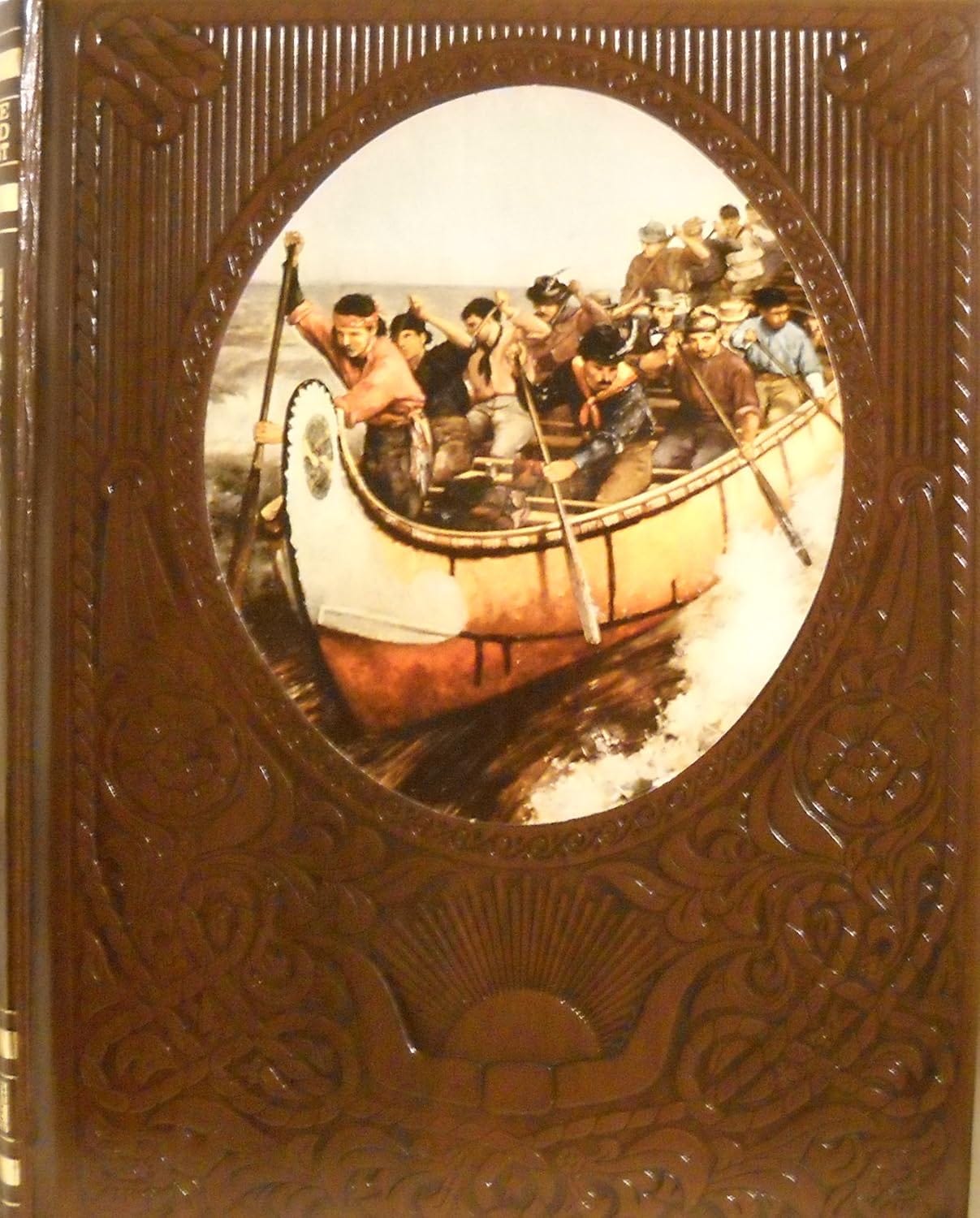
The Canadians by Ogden Tanner
Part of the Time-Life series “The Old West”, this work focuses on the early-to-mid 19th century settlement of Canada west of Ontario. It discusses the fur traders, the search for the Northwest Passage, American Union Army veteran penetrations into the Prairies, and the establishment of order by the predecessors of the Royal Canadian Mounted Police.
Crossing the 49th Parallel by Bruno Ramirez
Canada’s unfavorable climate, inferior constitution, and smaller economies of scale left it considerably less pleasant than the United States for the 19th and much of the 20th centuries. This led to a steady stream of emigrants southwards, particularly to upstate New York and eastern Michigan. This book focuses mostly on English-speakers, and shows that English-Canadians are Americans whatever their citizenship.
The Empire of the St. Lawrence by Donald Creighton
A work of hydrological determinism focusing on Canada’s (then just Ontario and Quebec) history to 1850. The author contrasts the experience of the settlements of North America’s main internal waterways from New Orleans up the Mississippi to the Great Lakes down the Saint Lawrence and into the Atlantic with the settlement of the Atlantic fringe. Ultimately the Erie Canal led to the supersession of the Saint Lawrence trade route for over a century, beginning a period of economic distress and a series of political crises which led to a failed pro-American revolution and the demoralization of Loyalist elites in Canada. Had we not been so distracted with our sectional divides in the 1850s, we would have easily been able to take a Canada far more eager for trade with America than Britain.
A History of Alberta by J.G. MacGregor
Somewhat dated, I found this book most valuable for its discussion of the semi-theocratic elected government in the late 1930s and 1940s as well as the social effects of the post-war oil boom. Alberta, initially settled with a considerable number of Americans, has always had a considerably different culture from the rest of Canada.

The Traitor's Hand by Sandy Mitchell
An enjoyable science fiction novel set in the Warhammer 40,000 universe. It features a political commissar who has to investigate subversives preparing a planet for an invasion.

Caves of Ice by Sandy Mitchell
Part of the same series as the previous book. Less enjoyable - it’s half fending off a barbarian invasion, half an investigation into an ancient mystery. They don’t fit well together.
Lament for a Nation by George Grant
Grant was a philosopher, but became best known for his pessimistic work on Canadian nationalism. His “Lament for a Nation” was written in 1965, two years after the Progressive-Conservative Prime Minister Diefenbaker was squeezed out of office following his slowness to support the United States during and following the Cuban Missile Crisis. Grant saw Canada as an obsolete, conservative state built upon the particular traditions of the English and French Canadians. He saw the United States as the progressive world empire which would inevitably draw Canada into its orbit, and indeed already had to an extent.
The book, like similarly pessimistic books by contemporary American rightists, is insightful for its time but seriously underestimates the adaptability of modern states. Pierre Trudeau came into office a few years after “Lament for a Nation”’s publication and forged a new Canadian state which proved to satiate the progressive impulses of at least most modern Canadians, whatever its other issues.
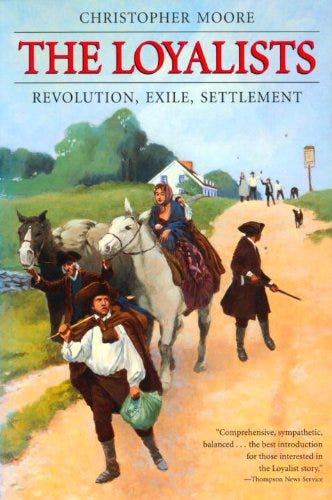
The Loyalists by Christopher Moore
A history of the losers of the American Revolution, Moore’s work discusses the fates of the Loyalist exiles to Canada in the 1780s. Those who settled in the Province of Quebec eventually formed Upper Canada in what is now Ontario, creating an aristocratic and exclusionary state. Others ended in Nova Scotia, whose west was split into New Brunswick. New Brunswick, settled predominately by Loyalists from the Middle Colonies, adopted an effectively American and democratic government due to the refusal of the middle class refugees to accept subordinate status. A useful work in understanding why different parts of Canada took different paths in the first decades of the 19th century.
The Morning After by Chantal Hebert and Jean LaPierre
Drawn heavily from interviews with the participants in the constitutional negotiations between Quebec and the rest of Canada in the lead up to the 1995 Quebec sovereignty referendum, this can be a confusing read for one unfamiliar with Canada’s modern history. Nonetheless its an invaluable resource in understanding the attitudes and plans of the politicians of the time. Notably includes a discussion of Saskatchewan’s plan to declare independence immediately following Quebec, Reform Party’s plans to try to topple the federal Liberal Party and impose English monolingualism in event of a successful Quebec sovereignty vote, and the antagonism of the Amerindians towards the Quebecois.
I recommend Hebert’s articles elsewhere to those interested in reading about modern Quebecois politics in English.
The Other Quiet Revolution by Jose Igartua
Canada, centered around the English-speaking Protestant majority, was only really a nation for a few decades following the First World War. Before her people saw themselves as British first and foremost, while after they were deracinated citizens uniquely denied representation outside of the electoral process. This book discusses that period of change, which established Canada’s current and utterly exhausted discourse. Ultimately Canada became a country without a purpose after the end of the British Empire, and her English-speaking parts should have been annexed by the United States decades ago.
Fatimid History and Ismaili Doctrine by Paul Walker
A collection of monographs, it’s an illuminating work on medieval Islam. The Ismaili sect was, unlike other branches of Islam but like Mormonism, falsified on the basis of claims made centuries after the founding of the core religion which were proven incorrect. This weakened the appeal of the Fatimid dynasty perhaps less than it should have. The most notable chapters in the book are on book production and dissemination in Fatimid Egypt. If the extant catalogues of Fatimid libraries are accurate, 11th century Egypt’s scholarly output, driven by both theological concerns and state propaganda campaigns against the Abbasid caliphs, was not exceeded in the Middle East until the middle of the 18th century. Possibly an important read for those interested in why the Islamic world fell behind the West.
Political Unrest in Upper Canada 1815-1836 by Aileen Dunham
A nice companion work to “The Loyalists”, this focuses specifically upon what is now the province of Ontario. The demographic expansion of New England had begun spilling into the Province of Quebec as early as the 1760s, but swamped the Loyalist population of Upper Canada (Ontario) in the first twenty years of the 19th century. While scattered and poorly organized, the American population proved to be a serious threat to the British oligarchy. Economic problems in the middle of the 1830s exacerbated the complaints of the heavily American reform faction which finally led to a rebellion in 1837.
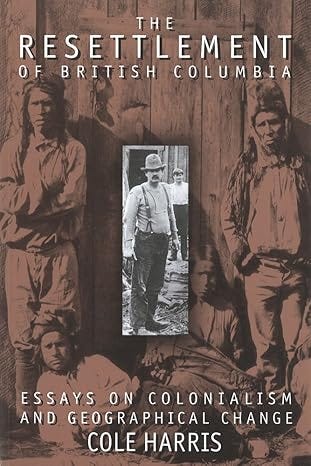
The Resettlement of British Columbia by Cole Harris
This book makes clear just how tenuously the British held British Columbia during the 19th century. In the 1880s, the British had not yet attained a numerical majority over the Amerindians in the province, and Americans in the Pacific Northwest outnumbered British by about 15 to 1. While this would not be remarkable for the far north or the bleak Prairies, it is noteworthy given the superiority of Vancouver’s harbor over all of the other harbors north of San Francisco. If the United States had taken Vancouver in the 19th century, it would have quickly outgrown Seattle and Portland.
Rise to Greatness by Conrad Black
While perhaps worthwhile for a rough outline of Canadian history, Black’s book is quite disjointed. I recommend against reading it.
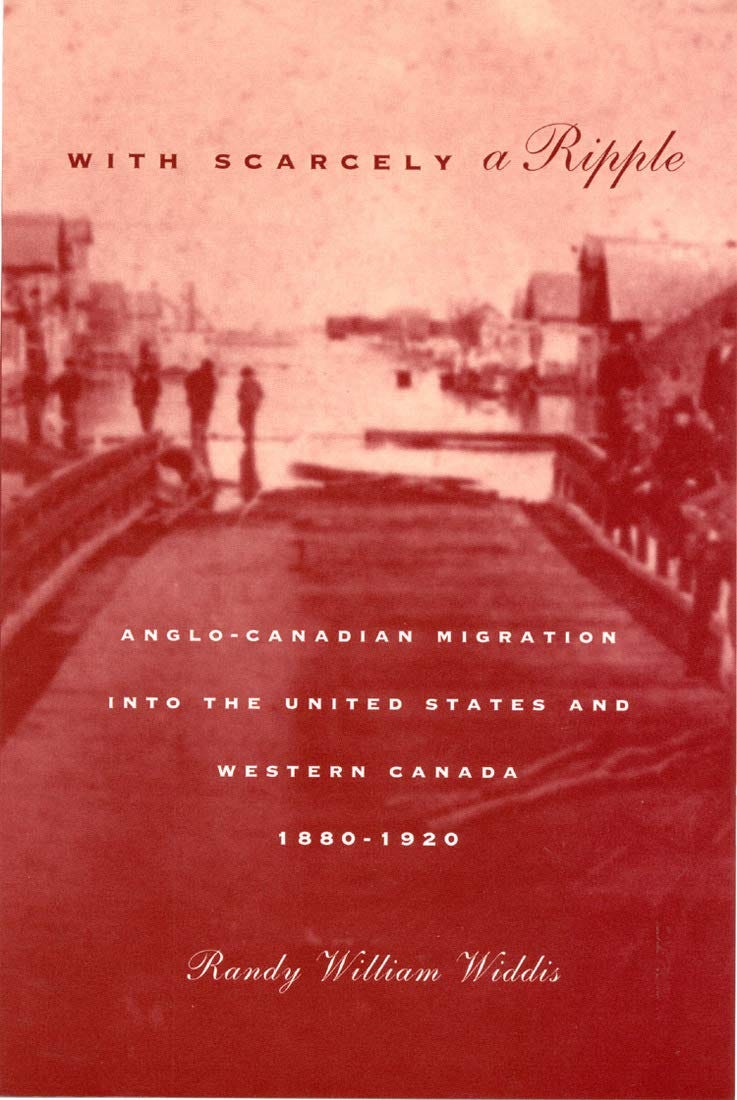
With Scarcely a Ripple by Randy Widdis
Covering similar material as “Crossing the 49th Parallel”, this includes the late 19th century migrations both northwards and southwards. There is useful data on American migration to Canada, mostly farmers to Alberta and Saskatchewan, who would come to play such a large role in the cultural and political distinctiveness of those two provinces.
Selling Illusions by Neil Bisoondath
I never understood the “Intellectual Dark Web” of the 2010s as they made themselves out to be a new phenomenon of moderate liberals antagonistic to right radicalism and left identity politics. This book is a good example of how their attitudes and complaints predate them by at least twenty years. There is nothing new under the sun.
This Unfriendly Soil by Neil MacKinnon
A nice discussion of the hard lives which the Loyalists had after they fled to Nova Scotia. I found the demographic information most useful. It also has a discussion of the the Black Loyalists. Slaughtered or re-enslaved by the Patriots in America, they found little succor in Nova Scotia. They were driven off of the best land and left to starve. Only a few survived, suggesting that Nova Scotia’s current black population largely derives from post-1812 black settlers.
Empires and Barbarians by Peter Heather
A useful companion book with Ward-Perkins’ “The Fall of Rome and the End of Civilization”. I drew upon it heavily for the later parts of my posts on the Germanics and the Slavs.
The Origins of Woke by Richard Hanania
There is little new in this book that Hanania hadn’t already blogged. For those who haven’t read his blogposts, it’s well worth reading. The thesis is that civil rights law gave the democratically unaccountable judiciary the ability to construct a legal environment which forced the bureaucracy and corporate world to install self-aggrandizing woke cadres across themselves. It’s a model which explains a great deal, but not all of the problems which we occupy ourselves with, and one which can be expanded to understand similar problems in the United Kingdom and Canada. Even more broadly, it can be classified as one of several methods by which states discipline and align their populations. While effective at indoctrination, it, unlike formal party-states, is poor at mass mobilization.
Lies of the Tutsi in Eastern Congo/Zaire by John Kapapi
Kapapi is a native, non-Tutsi resident of the eastern Congo, currently under partial occupation by Rwandan Tutsi. Kapapi, like other authors from the Great Lakes, describes the Tutsi as a fearsome, clever, and acquisitive people. He argues on the basis of Belgian and German colonial records that the Tutsi were not present in eastern Congo at the time of the Belgian acquisition. They are thus ineligible for Congolese citizenship, which requires ancestral residence in 1885. Instead, the Tutsi gradually began to encroach on the eastern Congo following wars in their homeland in the 1890s. Through their cleverness and alignment with the Belgians, they gradually acquired land from the 1920s through the 1940s. Since then, per Kapapi, they’ve conspired to take even more land, with crypto-Tutsis (attested in similar works and memoirs) infiltrating the eastern Congo and the Congolese government in preparation for takeover. I am uncertain how much to trust this book, but notably it does not embrace Hutu revisionist claims in Rwanda itself.
The Last Great War of Antiquity by James Howard-Johnston
The spectacular Arab conquests and spread of Islam in the 7th century have long been of fascination. This book covers the main drama in the Middle East immediately before the Arab conquests: the last Roman-Sassanid War of 602-628. While the war began as another border conflict limited to the heavily fortified frontier, Roman infighting led to a Sassanid breakthrough in 610. That breakthrough led to the loss of Egypt, the Levant, and most of Anatolia by 620. The campaigns of the 620s saw the near-end of the Roman Empire, which was only saved through bold campaigns through Anatolia and the Caucasus into the Sassanid heartland as well as a Turkic invasion of Iran. While much of the book is a discussion of the reliability of sources and what we know from archaeology and numismatics, it’s nonetheless quite engrossing. Many of you will thoroughly enjoy it.
The Ottomans by Marc Baer
I was disappointed by this, and can’t recommend except as a basic outline. Like Amanat’s “Iran: A Modern History”, it focuses too much on gays & court life in adherence to contemporary fashions in popular history. Unlike Amanat’s book, it does not redeem itself elsewhere. It doesn’t discuss the hugely important divides between the Ottomans’ Balkans and Anatolian territories, the longstanding tribal disputes which delayed modernization, or the long-term effects of the Little Ice Age.
The Charter Revolution and the Court Party by F.L. Morton and Ranier Knopff
Canada has had two constitutions, the first an oligarchical constitution centered around provincial elites created in 1867, and the second also an oligarchical constitution centered around the judiciary in 1982. The first constitution allowed for gradual democratization which began to flower within twenty years. The second massively expanded judicial review, inflicting upon Canada all of the problems wrought by our Warren Court and Civil Rights laws. Canada’s weaker democracy made it particularly vulnerable to that kind of power grab, and has gradually diminished in importance.
A useful companion for and predecessor of Hanania’s “Origins of Woke”, and the most illuminating book which I read this year.
Age of Entitlement by Christopher Caldwell
A useful companion to Hanania’s book, which covers much the changes in the United States, but predominately from a social rather than a legal perspective. It’s a good book and a quick read, but has a noticeable hole in its neglect of the attitudes and actions of the Christian churches of the last few decades. America was an unusually religious country by Western standards until the 2010s, so religious institutions naturally played or could have played a substantial role in shaping American society. Caldwell’s neglect of this area takes away from an otherwise illuminating book.
The Religion and Rituals of the Nomads of Pre-Islamic Arabia by Ahmad Al-Jallad
Quick and illuminating read on what can discerned of the religion of the Arabs in last few centuries of the 1st millennium BC from extant North Arabian epigraphy, Biblical studies, and the Book of Idols. Remarkably similar to Greek mythology with its capricious gods and indifferent fates.
The Gaullist Attack on Canada by JF Bosher
France has never quite reconciled itself with its loss of empire, and even today tries to play an active role in the world. It was even bolder in the 1960s and 1970s, when it backed Quebecois separatism both openly and covertly. This book discusses France’s covert (and typically financial/cultural) operations in support of Quebecois separatism. While “Relations particulières: la France face au Québec après de Gaulle” is supposed to be the best treatment of this topic, those of us who cannot read French are limited to Bosher’s book.
The “Five Eyes” Intelligence Sharing Relationship by John Weaver and Tom Roseth
A brief introduction to the interrelationships of the intelligence agencies of the United States, United Kingdom, Canada, New Zealand, and Australia. There is little illuminating as it’s effectively a catalogue.
From Left to Right by Dale Eisler
Of the three Canadian provinces with an active separatist movement, Saskatchewan is the most obscure. It is, like Alberta, a Prairie province situated on the Canadian part of the North American Great Plains. Its founding stock was disproportionately drawn from Americans, similar to Alberta’s, and its politics both left and right were also heavily derived from the United States rather than eastern Canada. Its similarities with its western neighbor end there.
Unlike Alberta, whose oil industry shaped its politics and society in the second half of the 20th century, Saskatchewan was shaped by its state-owned “crown” companies and potash mines. Its democratic socialist parties were heavily Christian influenced, and dominated the province from the 1940s through the 1970s. They appealed to the median voters of Saskatchewan through populism: left economics and right social policies. Neoliberalism in the 1980s destroyed the material basis of social democracy in Saskatchewan by privatizing the industries the provincial government depended upon for revenues. This ensured that the provincial social democratic party (the NDP) became dependent upon the votes of the urban professional class, a marginal class in Saskatchewan. Thus the Saskatchewan Party, formed from remnants of the provincial Liberals and Progressive Conservatives, emerged as the dominant party in the 2000s through its appeals to the populist majority.
Pox Americana by Elizabeth Fenn
A quick read on the devastation which smallpox wrought on North America in the 1770s and 1780s. Authoress suggests that the Continental Army’s vaccination program significantly lowered its mortality rate, giving it a decisive advantage over the less organized and unvaccinated Loyalist auxiliaries who comprised the bulk of British forces during the Revolution. Fenn demonstrates that both Loyalists and Patriots deployed smallpox infected as walking bioweapons. The parts relating to blacks are also of interest - smallpox thinned the ranks of black Loyalists far more than Patriot massacres and starvation. In that respect it’s a nice supplement to Benjamin Quarles’ “The Negro in the American Revolution”.
Rethinking Church, State, and Modernity by David Lyon
A collection of essays on the relation of church and states in Canada. The two chapters I found most useful were those on the Catholic response to Quebec’s secularization and the mobilization of Protestant churches for Canadian unity in the lead-up to the 1995 Quebec sovereignty referendum. The Catholic Church and its religious orders had run Quebecois society from the 17th century until the Quiet Revolution of the 1960s, when Quebec rapidly secularized. With the diminishment of its social position - particularly the loss of the schools - the Catholic Church was reduced to a small flock of believers. The Dominican Order proposed that the Catholic Church abandon its pretensions to spiritual hegemony in Quebec, reject casual Catholics, and focus on a small core of devout Catholics. Its proposals were rejected, leaving Quebecois Catholicism a cultural artifact.
Constitutional Odyssey by Peter Russell
One of my favorite books this year, and a necessary companion read to “The Charter Revolution and the Court Party”. It goes through Canada’s constitutional history, and covers the bribery-driven nature of Canada’s creation in 1867. The discussion of the failed constitutional rounds following Quebec’s refusal to accept the 1982 Constitution may be relevant in 2027 as Parti Quebecois returns to power.
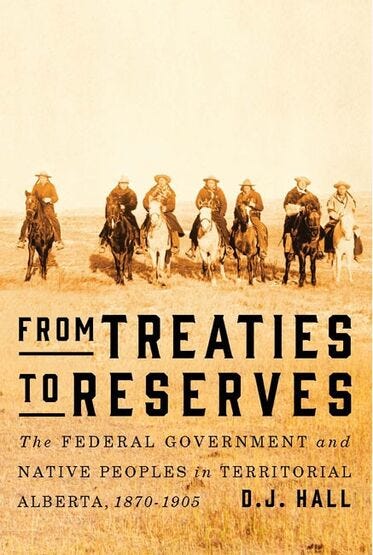
From Treaties to Reservations by DJ Hall
I read this in light of the British Columbia Supreme Court’s decision in Cowichan Tribes vs Canada to get a sense if Alberta was in serious danger of aboriginal title claims. Hall’s conclusion is that it is as the treaties were understood to be declarations of friendships rather than land surrenders. It reminded me of Khodarkovsky’s “Russia’s Steppe Frontier”, which discusses similar misunderstandings in negotiations between the sedentary states and the semi-nomadic steppe tribes. Unlike Russia, Canada lacks the moral confidence to insist upon her own understanding of the treaties.
The South During Reconstruction by E Merton Coulter
The Dunning School of history is of considerably infamy in Reconstruction studies, with E Merton Coulter in particular seen as a bete noire. The book and the school of historiography which it is part of describe the Southern state governments from 1865 to 1877 as corrupt and incompetent, something deeply insulting to USian readers of the late 20th and early 21st century.
While certainly a racist book, it is hardly obsessed with race and discusses with frank honesty how blacks benefitted enormously from their freedom. Per Coulter’s calculations and contra “Time on the Cross”, slavery was almost entirely exploitive of blacks, with 97% of their surplus value extracted by their owners. Skilled black artisans in the Upper South were able to earn wages comparable to Americans of their class in the northern states after their emancipation. The few blacks who fared poorly in freedom were those who had fled to Union outposts on the coasts towards the end of the Civil War, as they suffered greatly from disease and malnourishment, and those who tried to settle on the Great Plains without the knowledge of how to farm in drier climates.
The book has a great deal of data discussing the economic transformation of the South, as well as discussion of the great political influence of the railroads as they spread across the country. The parts discussing the debts incurred by the Reconstruction governments and the public declarations by the Democrat Party that it would repudiate those debts after returning to power were particularly illuminating. It is a good companion for the Oxford History of the United States volume which covers this same era: “The Republic for Which It Stands”.
Ethnocultural Processes of Central Belarus in Past and Present by Gurko, Rakova, & Kuharonak
Illuminating read on Belarusian archaeology which I drew heavily upon for my Story of the Slavs article. Like many archaeology books, there is a great deal of information in this which is extremely difficult to find elsewhere.
Agent of Change by Huda Mukbil
This book is an interesting read on the first steps of counter-terrorism’s shift in focus away from immigrant radicalism and towards discontented members of the majority. Mukbil worked for CSIS rather than the FBI, & the relevant changes took place in the late rather than in the early 2010s, but nonetheless the processes which led to the shift were quite similar. The changes happened in the following steps:
1) members of immigrant communities fluent in both their native & English are recruited to meet demands of government’s counter-terrorism push post-9/11
2) ethnic community identification among the new hires is encouraged per civil rights law (USA) or multicultural law (Canada)
3) since terrorism wasn’t & isn’t actually a threat, mentally-ill or discontented members of targeted communities are inflated as threats
4) the agents from the same communities tasked to address them come to see this, but understand the problem not as with counterterrorism (that idea would threaten their jobs & status) but as racism (real but exaggerated)
5) change in political party brings people unhappy with counterterrorism into power. Like all politicians, they don’t want to cut government jobs or appear weak, so they preserve programs.
6) New political party uses lawsuits & complaints from community groups in intelligence services to replace bosses & expand diversity/employment equity policies
7) New leadership is cowed by the empowered diversity/employment equity personnel, so focuses on groups without community representation - the majority
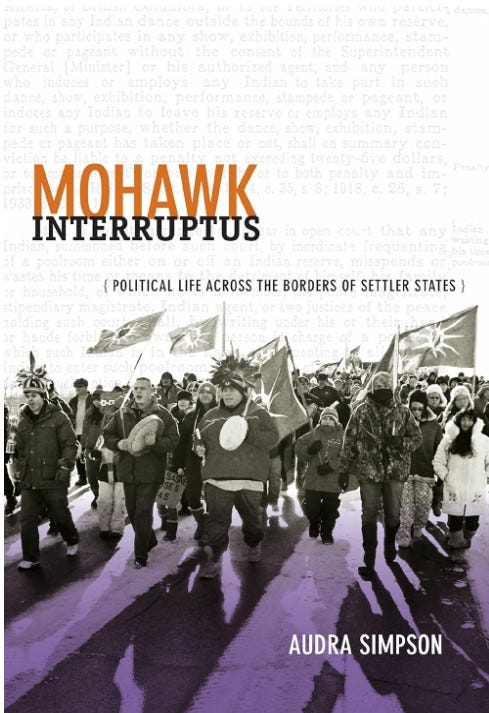
Mohawk Interruptus by Audra Simpson
A tedious read which celebrates Mohawk activism while neglecting to discuss how it is completely a product of Canadian government funding. Useless for understanding the Mohawk-Quebec conflict.
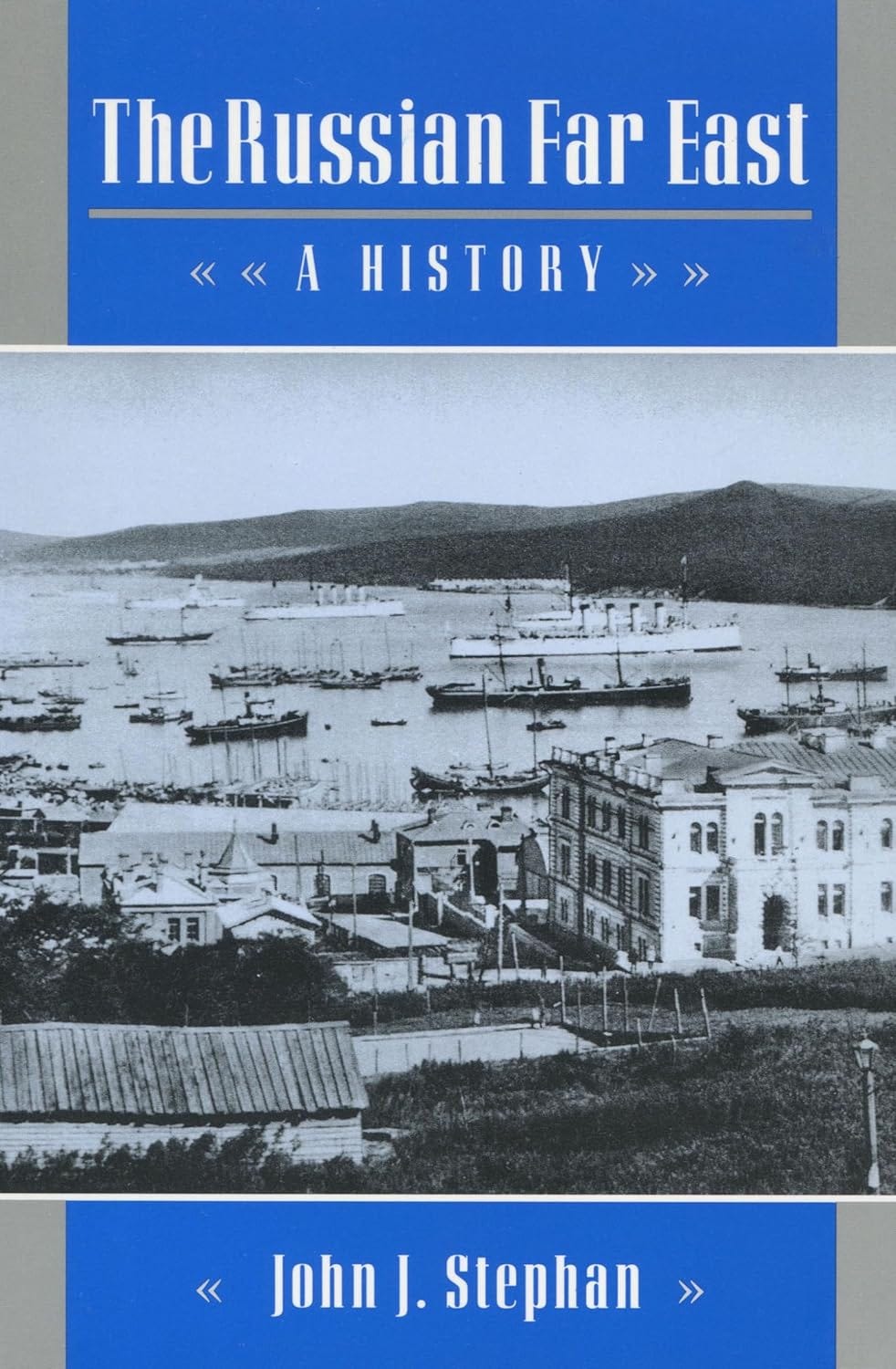
The Russian Far East: A History by John Stephan
A myopic history, Stephan spends most of his time discussing the 20th century history of Russia’s Far East. Nonetheless, it’s quite interesting. Russia’s intentions at the end of the 19th century were to secure her control over Manchuria and the warm-water port of Dalian on the Liaodong peninsula. Her defeat in the Russo-Japanese War forced a change in approach, so most settlers went to the less valuable land of Primorye instead. The region’s climate is unenviable, but military needs drove the Soviets to finally fully Russify the region in the 1930s with mass resettlements.
The discussions of the American intervention during the Russian Civil War were illuminating. The widespread support for the Bolsheviks among American troops, particularly those from Chicago, undoubtedly shaped US fears of communist ideological contamination during the First Red Scare.
The Grand Chessboard by Zbigniew Brzezinski
Brzezinski is considerably more thoughtful than most authors who write these sorts of books. He saw ethnic lobbies within the United States, international alliances such as NATO, regional trade blocs, and the World Court as the embryos of a truly global democracy. He saw that as the United States’ natural aspiration, and argues that we should encourage gradual democratization to enable more countries to integrate into the embryonic global framework.
Much of the book addresses challenges to the aspirational global democracy. In particular, he feared that US policies would drive the creation of a counter-hegemonic bloc of Iran, Russia, and China. While such a bloc would have little tying it together ideologically, its demographic and economic heft would made it a mighty adversary.
While these points have been made by others, his cultural and political pessimism stands out. His last chapter reflects on the social decay of the West, and ruminates that the embryonic global democracy growing in the United States may decohere the country to the point that our internal disputes render us incapable of projecting power aboard.
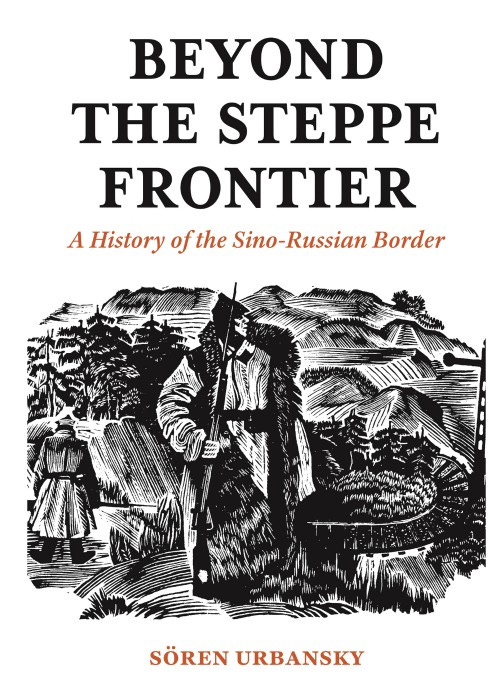
Beyond the Steppe Frontier by Soren Urbansky
An enjoyable read on a very specific part of the Russo-Chinese border in northwestern Manchuria. The book describes in detail how the two great states exercised authority in that region first through the co-option of the local tribes, then through administration by typically mixed-race groups (Banner Armies and TransBaykal Cossacks), then to formal bureaucratic administration. The various Mongol and Tungusic tribes of the region were destined to be swept away by the end of the 18th century, but managed to endure with some independence into the 1940s. The defeat of the Japanese Empire ended whatever hopes remained for them.
The Frozen Echo by Kirsten Seaver
An interesting book which synthesizes archaeology, Norwegian/Danish/English/Flemish historical records, and Inuit oral history to discuss the exploration of North America from Greenland in the first half of the second millennium. The authoress makes a convincing case that the Greenlandic Norse were regularly traveling to Labrador (known to them as Markland) well into the 14th century, as well as that Beothuk hostility to Europeans on Newfoundland was due to unrecorded English or Portuguese encounters. Less convincingly, she argues that the Greenlandic Norse were not exterminated by the Inuit or died of starvation, but instead unsuccessfully emigrated to North America towards the end of the 15th century.
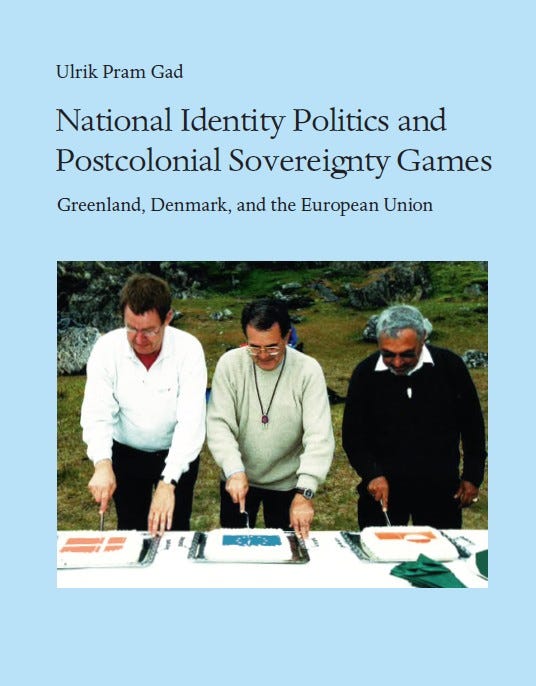
National Identity Politics and Postcolonial Sovereignty Games by Ulrik Pram Gad
I read this in hopes of understanding Greenlandic attitudes towards Denmark and the world, but regrettably the author focuses mostly on Danish opinions due to his lack of Greenlandic Inuit knowledge. Nonetheless it still had some interesting takes on how Greenland’s position in the Nordic world could be evaluated.
The Oxford Handbook of the Prehistoric Arctic
Part of the dense but useful Oxford Handbook series, I drew on this heavily for the early parts of my Greenland article. It’s a nice collection of essays on prehistoric Arctic topics which saves one the time of going through a few decades of archaeology and linguistics papers. I skimmed back through parts of “Mid-Holocene Language Connections between Asia and North America” while reading it. Together with recent DNA research, they suggest that the Saqqaq and Dorset people of the prehistoric Arctic probably spoke languages distantly related to the modern Aleut languages.
The Cambridge History of China: Volume 2, The Six Dynasties, 220–589 by by Albert E. Dien & Keith N. Knapp
China fell into its version of the Crisis of the Third Century, the Three Kingdoms period, several decades before the Romans. Like the Romans, they restored order and reunified the realm in the 280s. Unlike the Romans, their restorer adopted an almost feudal policy of land grants to his clan members, leading to an even more destructive breakdown in the early 4th century.
The remainder of the period discussed in the book is driven by dynamics in northern China and southern China. In the north, states, typically led by barbarians from even further north, waged wars for regional dominance from a core in either the northwest or the northeast. On occasion, a state would unify the north and invade the south. In the south, the Han Chinese states proved enduring in statehood but not in dynastic succession, with numerous military usurpations.
The book also describes the assimilation of remaining non-Han peoples along the Yangtze over the course of the 3rd and 4th centuries, the massive die offs accompanied by the collapses of the Han and Western Jin dynasties, the spread of Buddhism and Daoism, agricultural reforms, and the methods of state mobilization through the “Three Elders System” among much else. It suggests that the Three Kingdoms period laid the groundwork for the “south shift” of Chinese ancestry during the Tang dynasty described in ancient DNA research.
Notably there was considerably more institutional continuity than I had believed. If Han China was a Western state, Western historians would argue that it hadn’t collapsed until the fall of the Chen dynasty in 589. Overall an enjoyable and illuminating read.
What have you all enjoyed reading this year?
Not often I see someone else who has read John. J Stephan, but his work on the Russian Far East is definitely interesting and in a style that is very readable. If you liked that one, try another of his, "The Russian Fascists: Tragedy and Farce in Exile, 1925-1945". Very focused on the goings-on in Manchukuo in that time period with some...colourful White emigres, something that is mostly forgotten now. (Though it was written way before the Soviet archives opened up more, which changes some stories)
The Succession to Mohammed by Madelung;
Oxford Handbook of the Bronze Age Aegean;
The Edwardian Crisis, Powell
The Origins of the First World War, Joll
The Long Road to the Industrial Revolution, Van Zanden
These were probably the most enjoyable five